Introduction
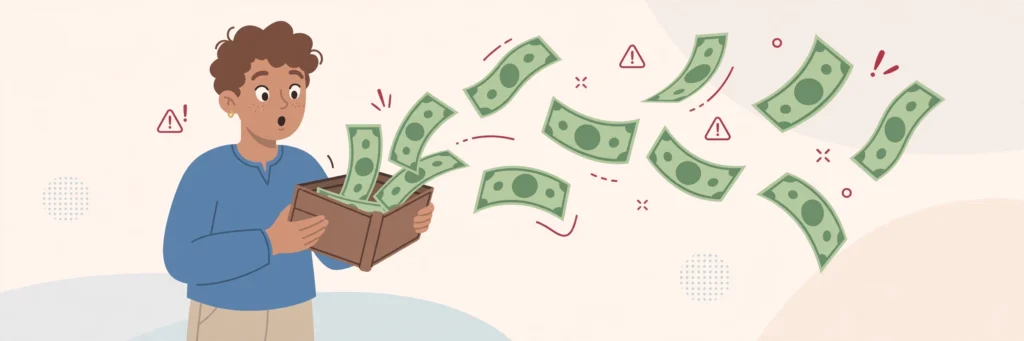
Last January I sat at my kitchen table with three months of bank statements, a highlighter, and a growing sense of dread. I’d made decent money all year. I had nothing to show for it. Not an emergency fund, not a dent in my credit card balance — nothing. The money had just… evaporated. DoorDash here, a Target run there, a subscription I’d forgotten I even had.
So I did what every broke person with Wi-Fi does: I googled the best budgeting method for beginners in 2026 and tried them all. Not read about them — actually lived with each one for a month. Five methods, five months, one very annoyed bank account. And here’s what nobody on YouTube tells you: there is no single best method. There’s a best method for you, and it depends on how your brain works, how steady your income is, and how much time you’re willing to spend on this every week. This post will help you figure that out in about ten minutes.
Why Most Budgets Die Before the Second Paycheck
Before we compare methods, let’s be honest about why yours probably failed last time. It wasn’t because you’re bad with money. It was because of one of these two traps.
- Trap one: the budget was a fantasy. You wrote down what you wished you spent — $300 on groceries, $100 on fun — instead of what you actually spend. Then week one blew past the numbers, you felt like a failure, and you quit. A budget built on wishes is a diet built on “I’ll just stop liking pizza.” It never works.
- Trap two: it took too long. If your budgeting method needs 45 minutes of data entry every Sunday, you’ll do it twice and never again. The best system is the one you’ll still be using in March, not the one that looks impressive in January.
The 5 Methods, Head to Head
Here’s the short version before we go deep. I ran each method for a full month on a take-home pay of about $3,800.
- 50/30/20 rule: 50% needs, 30% wants, 20% savings and debt payoff. Easiest to start, hardest to stick to if rent eats half your income.
- Zero-based budgeting: Give every dollar a job until income minus assignments equals zero. Most control, most effort. The YNAB crowd swears by it.
- Pay-yourself-first: Savings moves out automatically on payday, you live on the rest. Almost no maintenance. Weak if your spending is chaotic.
- Envelope / cash stuffing: Physical cash in labeled envelopes for groceries, fun, gas. Brutally effective at stopping overspending. Awkward in a world that runs on cards.
- 80/20 rule: Save 20% first, spend the other 80% however you want. The simplest method alive — and the vaguest.
If you want the one-line verdict: most beginners should start with 50/30/20 or pay-yourself-first, then graduate to zero-based budgeting once the habit sticks.
Is 50/30/20 Really the Best Budgeting Method for Beginners in 2026?
The 50/30/20 rule is the method every personal finance article recommends first, and for good reason: you can explain it to a friend in one sentence. On $3,800 of take-home pay, it looks like this: $1,900 for needs (rent, utilities, groceries, insurance, minimum debt payments), $1,140 for wants (eating out, streaming, hobbies, the fun stuff), and $760 for savings and extra debt payments.
When I ran it, month one felt almost suspiciously easy. Three buckets, three numbers, done. I set it up in a spreadsheet in twenty minutes. I didn’t need an app, a course, or a color-coded binder. And the wants bucket is the secret weapon — because you’re allowed to spend $1,140 on fun, you don’t get that caged-animal feeling that makes people blow up their budget on a $200 impulse buy. Permission is built into the system.
But here’s the downside nobody mentions: the 50% needs cap is a fantasy in a lot of American cities now. If your rent is $1,600 and your take-home is $3,200, housing alone is 50% before you’ve bought a single egg. The rule doesn’t bend, so people either fudge the numbers or quit. When I tested it, I had to run it as 60/25/15 for a month when rent and car insurance landed in the same week — and honestly, that’s fine. The percentages are a starting point, not a religion. Adjust them to your real life and keep the structure.
My verdict: genuinely the best budgeting method for beginners in 2026 if your housing costs are reasonable and you want something you can set up tonight. If rent eats more than half your income, skip to pay-yourself-first below.
Zero-Based Budgeting: Total Control, Total Effort
Zero-based budgeting is the one the serious money people love, and I get it. The rule is simple: every dollar of income gets assigned a job before the month starts. Income minus assignments equals zero. Not “zero dollars left in the bank” — zero dollars unassigned. Your $3,800 might go: $1,500 rent, $450 groceries, $200 utilities, $150 gas, $300 extra credit card payment, $400 emergency fund, $150 dining out, $100 fun money, $550 everything else down to the last dollar.
The month I ran it, I knew exactly where every dollar was going, and I caught two leaks I’d never have found otherwise: a $14.99 streaming service I’d forgotten about and a $22 monthly “convenience fee” on a bill I could have paid a different way. That’s $444 a year, found in one afternoon. That’s the power of this method — it forces you to look at everything.
The cost is time. I spent about 30 minutes setting it up each month and 10 minutes a week keeping it honest. Apps like YNAB ($14.99 a month) and EveryDollar (free version available) are built for exactly this, and they help — but even with an app, you’re the one making a decision about every dollar. When I was digging out of debt, the thing that finally worked was actually this method, because it made the debt payment a line item I couldn’t pretend wasn’t there. The $300 extra payment wasn’t “whatever’s left over” — it was assigned on day one, before I could spend it on anything else.
Pay-Yourself-First and the Envelope Method: The Two That Survived My Real Life
These two methods are opposites in style but cousins in philosophy: both remove willpower from the equation.
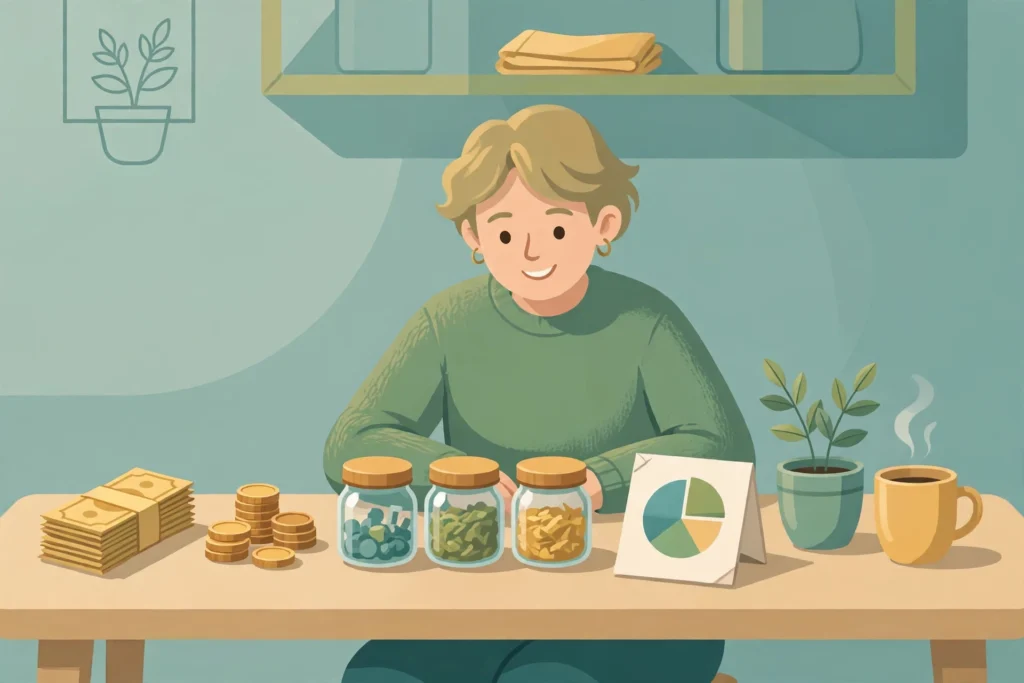
- Pay-yourself-first is almost embarrassingly simple. On payday, money moves automatically — $400 to a high-yield savings account at Ally or SoFi, $200 extra to the credit card, $150 to a Roth IRA — and you live on whatever’s left. No tracking, no categories, no weekly check-ins. I set up the transfers in about fifteen minutes and then basically forgot about it. It worked because the savings happened before I could talk myself out of it. The weakness: if your spending is genuinely chaotic, the “live on the rest” part can still end with a credit card bridging the gap. It’s best for people whose spending is already roughly under control and who mainly need to make saving automatic. If you don’t have an emergency fund yet, this is where I’d start — automate the transfer, then read my guide on how much your emergency fund should actually be so you know what number you’re aiming for.
- The envelope method (or cash stuffing, if you’ve seen it on TikTok) is the most old-school method on this list and, weirdly, the most effective at stopping overspending. You pull out cash for the categories you blow money on — say $500 for groceries, $150 for fun, $120 for gas — and put each pile in a labeled envelope. When the envelope is empty, you’re done spending in that category until next month. When I tested it, my grocery spending dropped 22% in one month with zero effort — I just stopped buying things I didn’t need because the cash was visibly disappearing. The downside is real life: most of us pay rent online, buy gas with a card, and order groceries through an app. The fix most people land on is a hybrid — cash envelopes for the two or three categories you overspend on, cards and autopay for everything else.
How to Pick Yours in 10 Minutes
Stop researching and decide. Here’s the decision tree:
- Your rent is more than half your take-home pay? Use pay-yourself-first. Automate a small amount — even $50 a paycheck — and focus your energy on the income side or the housing side, because no budgeting method fixes a math problem. My guide on budgeting on a low income goes deeper on this exact situation.
- You spend impulsively and lose track? Use the envelope method for your two worst categories (usually groceries and fun money) and pay-yourself-first for savings. The physical limit does what willpower can’t.
- You have debt and you’re motivated to kill it? Use zero-based budgeting. Assigning the debt payment on day one is the whole game.
- You want something simple that you’ll actually stick with? Use 50/30/20, adjusted to your real percentages. It’s the best budgeting method for beginners in 2026 for a reason — it takes twenty minutes to set up and five minutes a week to maintain.
- Your income changes every month? Use pay-yourself-first with percentages instead of fixed amounts — save 20% of whatever lands, no matter what lands. And if your paychecks are irregular, my post on breaking the paycheck-to-paycheck cycle has a buffer system that pairs well with this.
The 30-Day Setup That Makes Any Method Stick
Whatever you pick, do these five things in your first month and the method will actually survive contact with your real life.
- Week 1: Track before you judge. Don’t change a single habit yet. Just write down everything you spend for seven days — every coffee, every subscription, every “it was only $12.” Most people find $200–$400 a month they had no idea they were spending.
- Week 2: Set it up in one sitting. Pick your method, set your numbers, automate what can be automated. Transfers to savings should happen on payday, automatically, before you can touch the money. If your bank lets you split direct deposit — many employers do — send the savings portion straight to a separate account you never look at.
- Week 3: Do a 10-minute check-in. Mid-month, look at where you stand. Not to punish yourself — to adjust. If groceries are running hot because you hosted dinner, move $50 from the wants bucket. A budget you adjust is a budget that lives. A budget you treat as sacred law is a budget you abandon.
- Week 4: Celebrate the win, then lock it in. However much you saved — $50, $500 — move it to a high-yield savings account, somewhere slightly harder to reach than your checking account. Then write down one thing that worked and one thing that didn’t, and adjust next month’s numbers. That’s it. Repeat for twelve months and you’ll be shocked at the distance you’ve covered.
Conclusion
After five months of testing, here’s my honest answer: the best budgeting method for beginners in 2026 is the one you’ll still be using in June. For most people that’s 50/30/20, adjusted to fit real rent prices. For the debt-killers it’s zero-based budgeting. For the “just make it automatic” crowd it’s pay-yourself-first. The method matters far less than the month you actually start.
So here’s your next move: open your banking app, look at your last 30 days of spending, and write down the three categories where the most money went. Then pick one method from this post and set it up tonight — not tomorrow, not “when things calm down.” Tonight. Your future self, the one with an emergency fund and a credit card balance heading toward zero, is counting on the version of you that’s reading this right now.
Try It Free: The MoneyMatrixs Budget Tool
Reading is step one — doing is step two. Our free budgeting tool takes about 2 minutes: enter your income and expenses, see exactly what’s left over, and track your savings goal. No signup needed — your numbers stay private in your own browser.
Stop Reading. Start Doing.
Knowledge without action is just entertainment. The Budget Planner 2026 is a 21-page printable workbook — monthly budget sheets, debt payoff planner, savings trackers, the 52-week money challenge and more. $12, instant download, yours forever.