Introduction
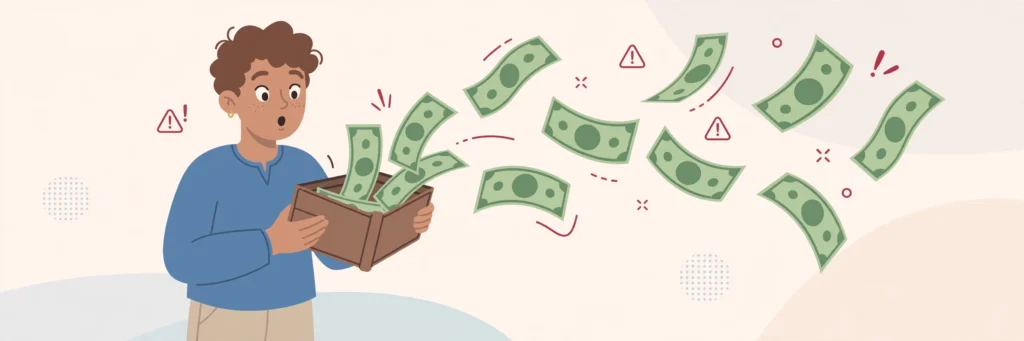
Nearly two-thirds of Americans say they live paycheck to paycheck — including a shocking share of six-figure earners. Breaking the paycheck to paycheck cycle is not about a miracle raise or a viral side hustle. It is about plugging the specific leaks that keep resetting your balance to zero every month. These seven strategies are the unsexy, proven ones that actually move the needle.
Table of Contents
- – The Real Reason You Can’t Get Ahead
- – 7 Ways to Break the Cycle
- – What to Do With Your First Buffer
The Real Reason You Can’t Get Ahead
Most people blame their income. But research consistently shows the paycheck-to-paycheck trap is mostly a timing and structure problem, not an income problem. You get paid, the bills and subscriptions and “small” purchases drain the account, and by day 25 you are counting hours until payday. There is no buffer, so every surprise — a flat tire, a doctor’s copay — goes on a credit card and the hole gets deeper.
The fix is not discipline. It is systems. Discipline fails at 11 PM when you are tired and scrolling; systems work while you sleep. Every strategy below is a system.
7 Ways to Break the Cycle
- 1. Get paid weekly, even when you are not. If your employer pays biweekly, divide each paycheck in half and budget by the week. Better yet, run your bills on the half of income that arrives first and treat the second half as “bonus money” to save. People who do budgeting wrong almost always budget the full month as one blob — and one blob always leaks.
- 2. Pay yourself on payday — automatically. The moment your paycheck lands, an automatic transfer moves a fixed amount (start with $25–$50) into savings. Not what is left over at month-end. What is left over at month-end is always zero.
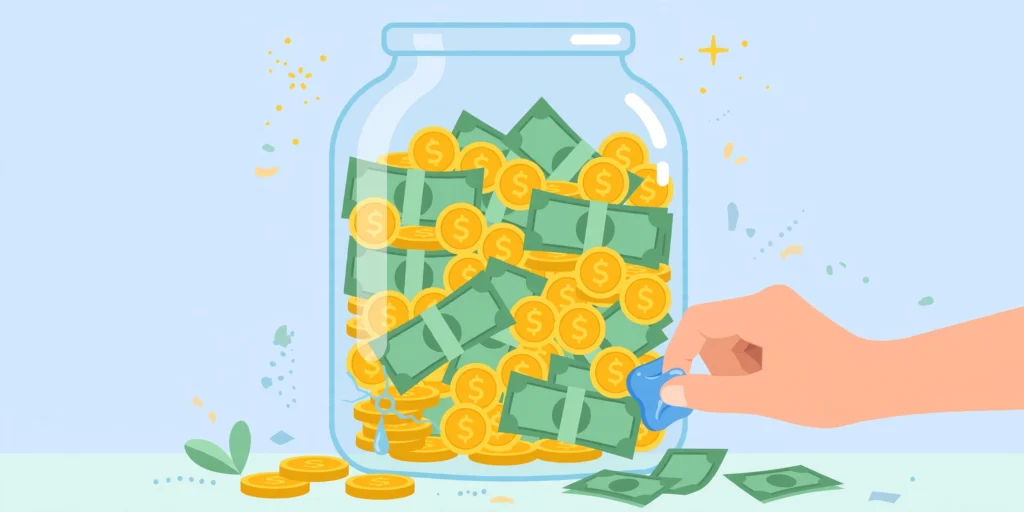
- 3. Kill the subscription stack. Go through three months of bank statements and cancel anything you have not used in the last 30 days. Streaming services, app subscriptions, subscription boxes — the average household bleeds over $200 a month on these. That is your entire buffer, sitting in someone else’s billing department.
- 4. Shrink one big bill, not ten small ones. People try to save by skipping coffee while overpaying rent, insurance, and their car payment. Call your insurer and shop quotes — it takes 20 minutes and often saves $500+ a year. Refinance or renegotiate one large recurring bill and you free up more cash than a year of skipped lattes.
- 5. Give every surprise its own fund. Surprises are only surprising if you do not budget for them. Car repairs, vet bills, holiday gifts — these happen every single year. Open free savings “buckets” and auto-fund them: $50/month for car stuff, $30 for medical, $40 for holidays. When the surprise arrives, it is just a withdrawal, not an emergency.
- 6. Sell the stuff, then stack the cash. Almost everyone living paycheck to paycheck has $300–$1,000 sitting in closets: clothes, electronics, tools, furniture. Sell it this month and put every dollar into your buffer. That buffer is what stops the next emergency from becoming debt.
- 7. Add a small income stream that runs without you. You do not need a second job — you need a leak-plugger. Even zero-money side hustles that bring in $150–$300 a month change the math completely when you are at zero. And once the buffer exists, small monthly investments compound into real wealth — the escape velocity comes from consistency, not size.
What to Do With Your First Buffer
The moment you have $1,000 sitting in savings, the psychology flips. Expenses stop being emergencies and start being errands. Do not “reward” yourself by spending it — that buffer is the wall between you and the credit card. Let it sit. Add to it. When it hits one month of expenses, you are officially no longer paycheck to paycheck, even if your salary has not changed one cent.
Conclusion
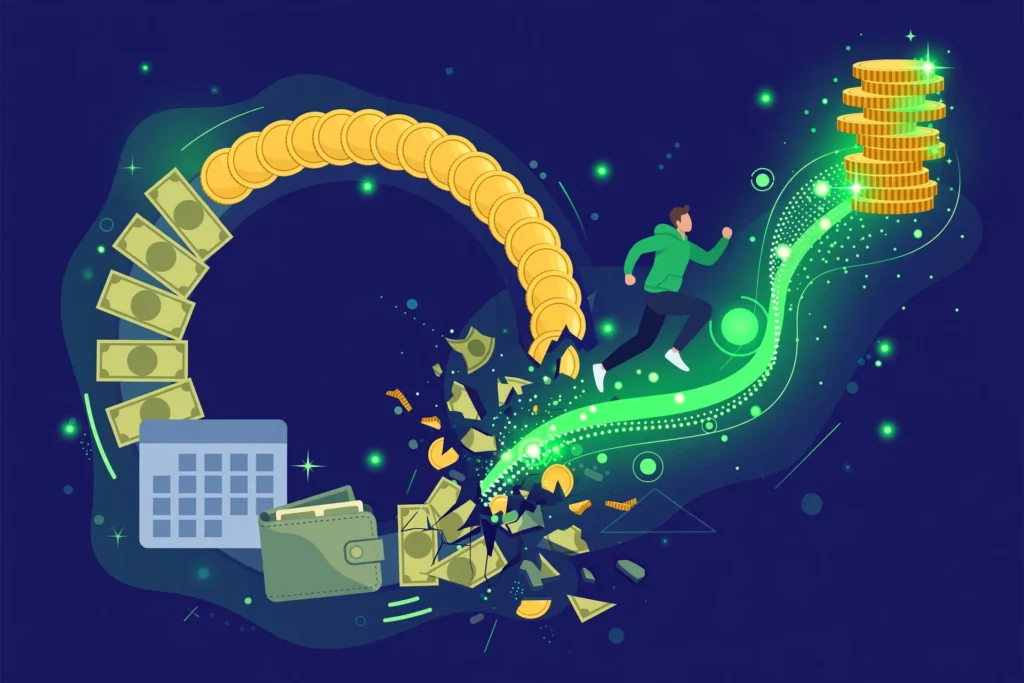
Nobody breaks the paycheck-to-paycheck cycle with a single heroic act. They break it with boring systems: automatic savings on payday, one buffer for surprises, one big bill shrunk, and every dollar of found money stacked instead of spent. Pick two strategies from this list and start them today. In six months, payday will feel like a refill, not a rescue.
Try It Free: The MoneyMatrixs Budget Tool
Reading is step one — doing is step two. Our free budgeting tool takes about 2 minutes: enter your income and expenses, see exactly what’s left over, and track your savings goal. No signup needed — your numbers stay private in your own browser.
Stop Reading. Start Doing.
Knowledge without action is just entertainment. The Budget Planner 2026 is a 21-page printable workbook — monthly budget sheets, debt payoff planner, savings trackers, the 52-week money challenge and more. $12, instant download, yours forever. Your future self will thank you. Use code LAUNCH20 at checkout for 20% off — launch sale ends October 19, 2026.