Introduction
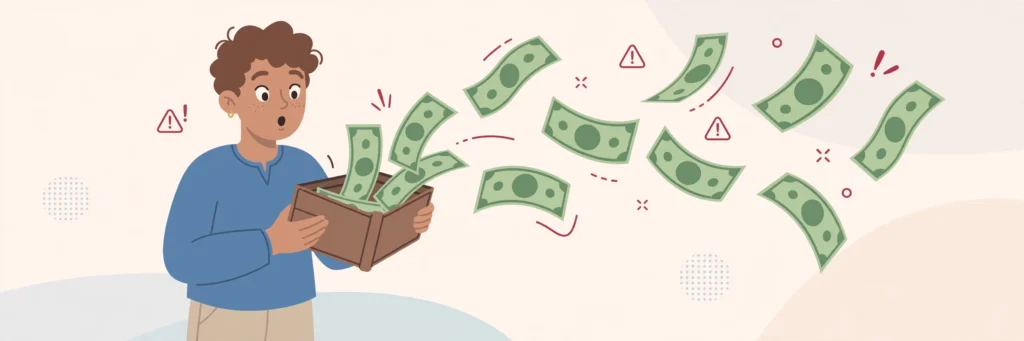
It’s 11:47 PM. You’re half asleep on the couch, phone in hand, and your Amazon cart has $64.17 in it. You don’t remember putting the third item there. Somehow it feels necessary — a kitchen gadget, a shirt, a “deal” that expires in 23 minutes. You click buy. You feel a little rush. Then nothing.
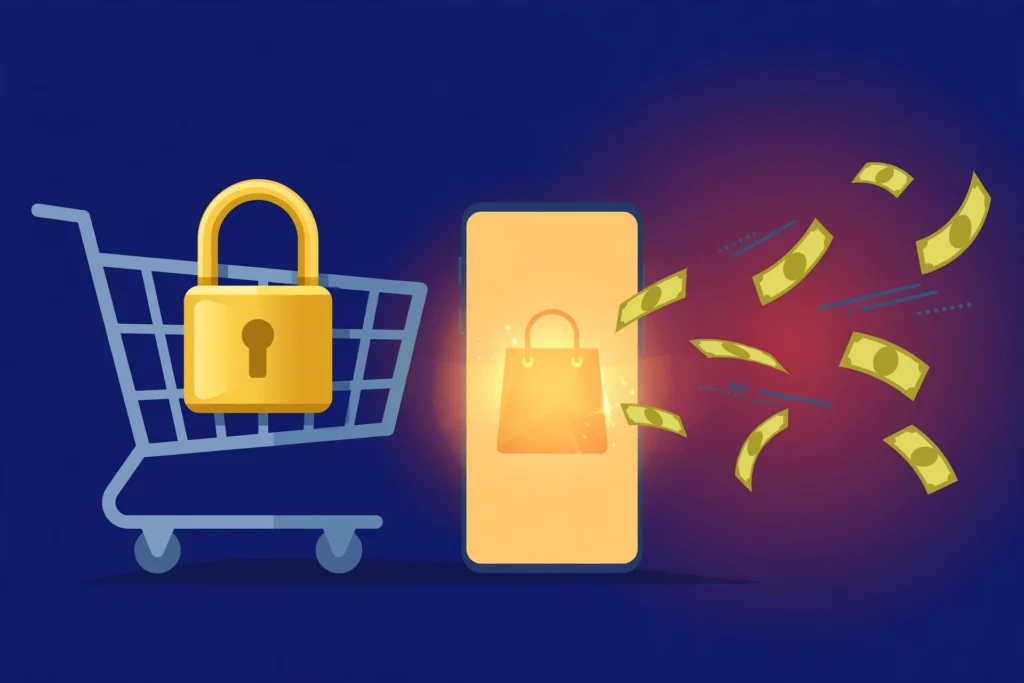
If that story feels familiar, you’re not weak — you’re up against a trillion-dollar machine designed to make you buy without thinking. One-click ordering, saved cards, “buy now, pay later,” and lightning-deal timers exist to short-circuit your judgment. The good news: once you know how the machine works, you can beat it. Learning how to stop impulse buying for good isn’t about willpower — it’s about building systems that make unplanned spending harder than saving.
Table of Contents
- – The Real Cost of the “Small” Buys
- – Make Spending Harder Than Saving
- – Change the Rules: Systems That Beat Willpower
- – Fix the Feeling: The Emotional Triggers Behind the Clicks
- – Your 30-Day Reset Plan
The Real Cost of the “Small” Buys
Nobody goes broke from one $65 purchase. They go broke from fifty of them a year — roughly $3,200 that vanishes without a single purchase you’d call irresponsible. Impulse buying is death by a thousand $25 carts.
Here’s the trick that makes it visible: the cost-in-hours conversion. Divide the price by your hourly pay after tax. A $60 impulse buy on a $20/hour wage isn’t $60 — it’s three hours of your life standing on concrete at work. Three hours you’ll never get back, traded for something that’ll sit in a drawer by March.
If you want a framework for where your money should be going, the 50/30/20 budget rule gives you real numbers to work with — impulse buys almost always come straight out of the 20% that should be savings.
Make Spending Harder Than Saving
Retailers remove every ounce of friction between wanting and buying. Your job is to put it back. These tactics work because they attack the process, not your character:
- 1. Delete your saved card numbers everywhere. One-click buying is a trap with a convenience costume. Force yourself to walk to your wallet every time and you’ll abandon half your carts — which was the entire point.
- 2. Unsubscribe from every promo email. That “FLASH SALE ENDS TONIGHT” email is not information — it’s a trigger. Search your inbox for “unsubscribe” and nuke them all. If a sale is real, you’ll find it when you actually need the thing.
- 3. Delete the shopping apps from your phone. Browsing Amazon in bed is not research; it’s a slot machine.
- 4. The 48-hour rule. See something you want? Put it on a wish list — not in a cart — and wait 48 hours. After two days, most “must-haves” reveal themselves as boredom. The ones that survive are worth buying on purpose, not on impulse.
Change the Rules: Systems That Beat Willpower
Willpower is a terrible savings strategy because it gets tired. Systems don’t. Here’s how to stop impulse buying for good by restructuring the defaults:
- 5. The one-in-one-out rule. Want new shoes? An old pair gets donated first. This forces a real comparison — new thing vs. existing thing — instead of new thing vs. nothing, and it puts a natural speed bump in front of every purchase.
- 6. Keep a wish list, not a cart. A wish list has no checkout button, no timer, no “customers also bought.” Review it once a month. You’ll be stunned how many items feel embarrassing four weeks later.
- 7. Beware the BNPL trap. “Buy now, pay later” splits a $120 purchase into four $30 payments so your brain files it under “cheap.” It’s debt with training wheels, and stacking three or four plans turns your paycheck into a jigsaw puzzle. If you can’t pay full price today, you can’t afford it.
- 8. The cash-at-home waiting period. For bigger wants, withdraw the amount in cash and keep it in an envelope for a week. Physically holding the money — and watching life go on fine without the purchase — kills more impulse buys than any spreadsheet. The money you don’t spend can go straight toward an emergency fund; here’s a practical path to build an emergency fund from zero.
Fix the Feeling: The Emotional Triggers Behind the Clicks
- 9. Name the trigger before you buy. Almost no impulse purchase is about the product. It’s about a feeling: boredom, stress, celebration, loneliness. Next time you feel the urge, pause and say the feeling out loud: “I’m bored, not in need of a candle.” The purchase was never the cure — naming the feeling breaks the spell about half the time, and this is the only tactic on the list that compounds. The friction tricks protect you this month; understanding your triggers protects you for good.
Your 30-Day Reset Plan
Don’t try all nine tactics on day one. Do this instead:
- – Week 1: Delete saved cards and unsubscribe from promo emails.
- – Week 2: Start the 48-hour rule and a phone wish list.
- – Week 3: Name your trigger before every purchase.
- – Week 4: Move what you saved toward a real goal — like the 12-month plan to save $10,000 on a low income — and look at the number.
Impulse buying isn’t a character flaw — it’s a design flaw in your environment, built by people who profit from it. Redesign the environment and the behavior follows. Start tonight: delete one saved card and unsubscribe from five emails.
Try It Free: The MoneyMatrixs Budget Tool
Reading is step one — doing is step two. Our free budgeting tool takes about 2 minutes: enter your income and expenses, see exactly what’s left over, and track your savings goal. No signup needed — your numbers stay private in your own browser.
Stop Reading. Start Doing.
Knowledge without action is just entertainment. The Budget Planner 2026 is a 21-page printable workbook — monthly budget sheets, debt payoff planner, savings trackers, the 52-week money challenge and more. $12, instant download, yours forever. Your future self will thank you. Use code LAUNCH20 at checkout for 20% off — launch sale ends October 19, 2026.