Last year, my savings account paid me about the same interest as the coins in my car’s cup holder. Then the Fed started hiking rates — most recently to 3.75%–4% in September — and suddenly certificates of deposit, the dusty savings product your grandparents used, started paying 4% or more. So are CDs worth it after the rate hike in 2026, or is this just another trap for people who are tired of watching their money sit still? I parked some cash in CDs this year, I did the math, and here’s the straight answer.
What a CD Actually Is (No Jargon, I Promise)
A certificate of deposit is the simplest deal in banking: you hand a bank a chunk of money, you agree not to touch it for a set period — 3 months, 6 months, a year, five years — and in exchange the bank pays you a fixed interest rate that’s higher than a regular savings account.
That’s it. There’s no stock market, no fund manager, no fine print about “variable rates subject to change.” The rate they quote you on day one is the rate you get for the whole term. If you open a 1-year CD at 4.5% with $10,000, you get $450 in interest. Guaranteed. Not “up to.” Not “if the market cooperates.” $450.
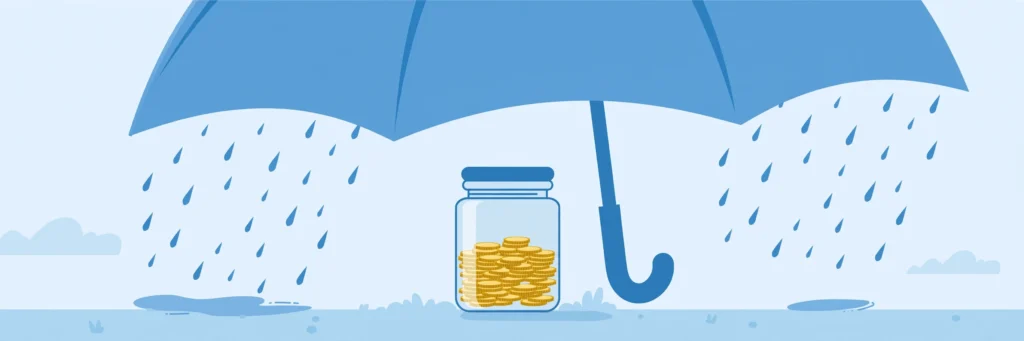
And if the bank fails — which, yes, people worry about — your CD is FDIC-insured up to $250,000 per depositor, per bank, exactly like a checking or savings account. I wrote a plain-English explainer on how FDIC insurance actually works if you want the details, but the short version is: for most people, a CD at an FDIC-insured bank is about as safe as money gets.
So why did nobody talk about CDs for a decade? Because for most of the 2010s and early 2020s, rates were near zero. A 1-year CD paying 0.5% wasn’t worth locking your money up for. The rate hikes changed the math completely — and that’s why this question matters now.
Are CDs Worth It After the Rate Hike? Let’s Do the Real Math
Here’s the comparison that actually matters. Say you’ve got $10,000 sitting in a regular savings account at a big national bank. Most of those pay around 0.01% to 0.5%. At 0.5%, you earn $50 in a year. Fifty bucks. That’s a pizza.
Now put that same $10,000 in a top 1-year CD paying around 4.5% (a realistic figure for competitive online banks and credit unions in late 2026). You earn $450. Same money, same safety, nine times the return. That’s not a rounding error — that’s a car payment.
Against a high-yield savings account, the gap is smaller but still real. A good HYSA pays roughly 4% right now, but here’s the catch: that rate floats. If the Fed cuts rates next year, your HYSA rate drops within weeks. A CD locks your rate in. If you believe rates have peaked — and a lot of economists think the hiking cycle is near its end — locking in today’s rate for a year or two is genuinely smart.
But — and this is the part the CD ads leave out — a CD only wins if you can actually leave the money alone.
The CD Ladder: How to Get the Rate Without Locking Everything Up
When I was digging out of debt, the thing that finally worked was removing temptation from the equation. I couldn’t trust future-me with a lump of cash sitting in checking, so I automated everything. CDs work the same way, except the lock is built in — and a CD ladder lets you use that lock without painting yourself into a corner.
Here’s how a ladder works with $5,000:
- $1,000 in a 3-month CD — matures soon, your first rung
- $1,000 in a 6-month CD — matures a bit later
- $1,000 in a 9-month CD
- $1,000 in a 12-month CD
- $1,000 in an 18-month CD
Every three months, one CD matures. When it does, you either spend the money if you need it, or roll it into a new 18-month CD at whatever the current rate is. After a year and a half, you’ve got a CD maturing every three months, all of them earning the longer-term rate, and you never have more than three months’ wait to reach any of your money.
A ladder is the honest middle ground. You get most of the CD rate advantage, you keep regular access to your cash, and if rates go up, your maturing rungs capture the higher rates. If rates go down, your longer rungs are already locked in at the old, higher rate. It’s the closest thing to a free lunch in personal finance, and the setup takes about twenty minutes at an online bank.
When a CD Is a Bad Idea (The Downside Nobody Mentions)
I like CDs. I’m still going to tell you when they stink.
- Your emergency fund does not belong in a CD. Full stop. If your car transmission dies on a Tuesday, you need that money on Tuesday, not after a 90-day early withdrawal penalty. Your emergency fund stays in a high-yield savings account where you can reach it in a day. If you’re still building that fund from scratch, start with this guide to building an emergency fund from zero — the starter-fund-first approach is the right order of operations.
- Early withdrawal penalties are real. Break a CD early and most banks charge 90 to 180 days of interest — sometimes more on longer terms. On a $10,000 CD at 4.5%, a 180-day penalty eats roughly $225. You don’t lose your principal, but you can wipe out most of your earnings. Only put money in a CD that you’re confident you won’t need before it matures.
- Inflation can still beat you. A 4.5% CD looks great until you remember inflation has been running around 3.7%. Your real return — what your money can actually buy after prices rise — is under 1%. CDs protect you from losing money. They don’t make you rich. Anyone selling a CD as a wealth-building tool is selling you something.
- Rates might keep rising. This is the genuine risk in late 2026. If the Fed hikes again in December, today’s 4.5% CD looks mediocre in six months. That’s another reason the ladder beats dumping everything into one long CD — you keep catching new rates as rungs mature.
CD vs. High-Yield Savings vs. Treasury Bills: The Honest Comparison
People ask me which one to pick, so here’s the whole picture in one place:
- High-yield savings account: Around 4% right now, fully flexible, rate can drop anytime. Best for your emergency fund and money you’ll need in the next few months.
- Certificate of deposit: Around 4% to 4.75% for 1-year terms at competitive banks, fixed rate, money locked up. Best for money you won’t need for a known period — a house down payment in 18 months, next year’s tax bill, a car fund.
- Treasury bills: Short-term government debt, currently yielding in the same ballpark as CDs, and the interest is exempt from state income tax (a real perk if you live in a high-tax state). Slightly more hassle to buy through TreasuryDirect or a brokerage, but arguably the safest option of all.
- Regular savings at a big bank: 0.01% to 0.5%. There is no reason to keep more than your monthly spending money here. None.
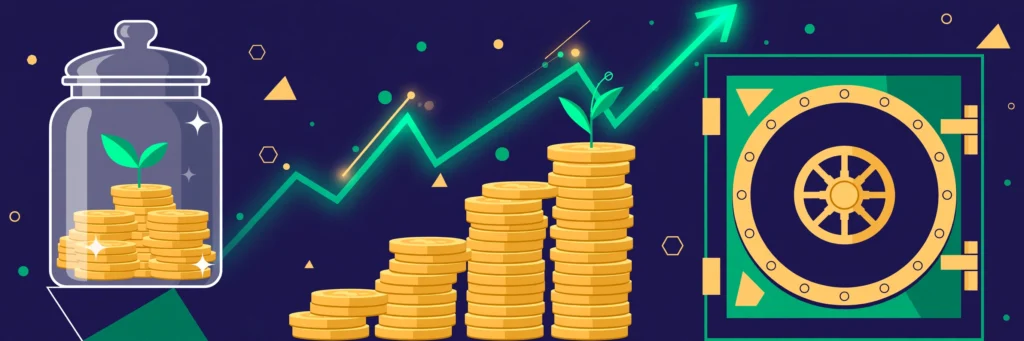
The right answer for most people isn’t one product — it’s a mix. Emergency fund in a HYSA, medium-term savings in a CD ladder, and anything you need in the next 30 days in checking. Boring? Yes. Effective? Also yes.
How to Actually Open a CD (Step by Step)
This takes less time than ordering takeout:
- Check rates at online banks and credit unions first. The best CD rates almost never come from the big branch banks. Ally, Marcus by Goldman Sachs, Capital One, and many credit unions consistently pay a full percentage point more than Chase or Bank of America. A quick search for “best 1-year CD rates” gives you the current leaderboard — rates change weekly, so check the day you buy.
- Pick your term based on when you’ll need the money. Saving for a vacation in 9 months? A 6-month CD, then roll it once. House down payment in two years? A ladder of 12- and 18-month CDs. Never guess — if you’re not sure when you’ll need it, use a shorter term or a no-penalty CD.
- Confirm FDIC (or NCUA for credit unions) insurance. It takes thirty seconds on the FDIC’s BankFind tool. If a bank offering 7% isn’t insured, that rate isn’t a deal — it’s a warning.
- Fund it from your existing bank account. Most CDs let you transfer in electronically. Minimums are usually $500 to $2,500 at online banks; some have no minimum at all.
- Set a calendar reminder for the maturity date. This is the step everyone skips, and it costs real money. When a CD matures, many banks auto-renew it into a new CD at whatever rate they’re offering that day — which is often much lower than the competitive rate you originally got. Set a reminder a week before maturity so you can decide: renew, roll into a longer term, or move the money.
One more tip: ask about no-penalty CDs. Several online banks offer them — you get a slightly lower rate, but you can withdraw the full amount after a short waiting period (usually 7 days) with no penalty. They’re the perfect training-wheels CD if you’re nervous about locking money up for the first time.
The Bottom Line
So, are CDs worth it after the rate hike in 2026? For the right money, yes — genuinely yes. If you have cash you won’t need for 6 to 18 months, a CD at a competitive online bank pays you roughly nine times what a regular savings account does, with the same FDIC protection and zero market risk. The ladder strategy fixes the biggest weakness, which is the lock-up, and no-penalty CDs fix it even further.
But a CD is a parking spot, not a plan. It won’t build wealth, it won’t beat inflation by much, and it should never hold your emergency fund. Use it for what it’s good at: making your idle cash work a little harder while you figure out the bigger moves.
Here’s your next step, and it takes ten minutes: look at your savings account right now. If there’s money sitting there that you know you won’t touch for at least six months — a tax refund, a bonus, savings for a goal that’s still a year away — check today’s 1-year CD rates at two or three online banks. If the gap over your current savings rate is more than 3 percentage points, open the CD. Your future self, the one cashing a $450 interest payment instead of a $50 one, will be glad you did.
Try It Free: The MoneyMatrixs Budget Tool
Reading is step one — doing is step two. Our free budgeting tool takes about 2 minutes: enter your income and expenses, see exactly what’s left over, and track your savings goal. No signup needed — your numbers stay private in your own browser.
Stop Reading. Start Doing.
Knowledge without action is just entertainment. The Budget Planner 2026 is a 21-page printable workbook — monthly budget sheets, debt payoff planner, savings trackers, the 52-week money challenge and more. $12, instant download, yours forever.