Introduction
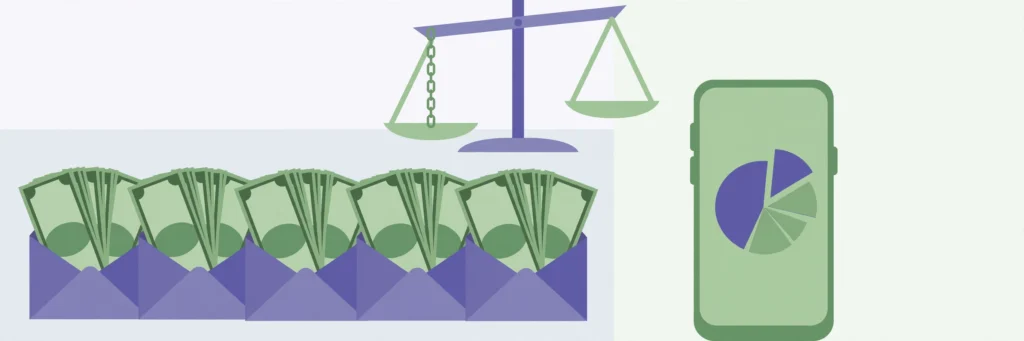
Cash stuffing — filling labeled envelopes with physical cash for groceries, gas, fun money — has millions of views on TikTok and a fiercely loyal following. On the other side sit budgeting apps that track every swipe automatically. Both promise the same thing: stop overspending. Only one actually works for most people. Here’s the honest breakdown, so you can pick the method you’ll still be using six months from now.
Table of Contents
- – How Cash Stuffing Actually Works
- – How Budgeting Apps Stack Up
- – The Honest Pros and Cons of Each
- – The Verdict: Which One Wins (and for Whom)
- – The Bottom Line
How Cash Stuffing Actually Works
The method is dead simple. On payday, you withdraw your spending money in cash and divide it into labeled envelopes: groceries, transport, dining out, personal spending, and so on. When an envelope is empty, spending in that category stops until next payday. No transfers, no “I’ll pay it back next week” — the envelope is the budget, enforced by physics.
Why it works is pure psychology. Studies on the “pain of paying” consistently show that handing over physical cash hurts more than tapping a card, which makes you spend less — often 12 to 20% less in discretionary categories. You also can’t accidentally overspend: the money is either in the envelope or it isn’t. For people who have tried budgeting apps three times and quit by February, that simplicity is the whole appeal.
The catch: it only works for variable spending. You can’t cash-stuff your mortgage, your insurance, or your phone bill. It’s a tool for the categories where you actually leak money — food, fun, shopping, coffee runs — not a complete financial system.
How Budgeting Apps Stack Up
Budgeting apps do the opposite: they leave your money digital and track it automatically. Connect your accounts, set category limits, and the app categorizes every transaction, sends alerts when you’re close to a limit, and shows you charts of where it all went. Good apps also handle the stuff cash stuffing can’t — bills, subscriptions, savings goals, and investments — in one dashboard.
The big advantage is visibility. An app shows you, in cold numbers, that you spent $412 on food delivery last month. No envelope system gives you that kind of receipt-level truth without manual work. Apps also scale: they work whether you spend $2,000 or $20,000 a month, and they don’t require a trip to the ATM or a drawer full of envelopes.
The big weakness is friction — or rather, the lack of it. Tapping a card while an app silently logs the transaction doesn’t hurt the way handing over a twenty does. Many people track their overspending perfectly in an app and keep overspending anyway. Awareness without a spending brake is just a well-documented leak.
The Honest Pros and Cons of Each
- Cash stuffing wins on: stopping overspending in the moment, zero learning curve, no subscriptions, no bank connections, and no data privacy concerns. It’s also free — envelopes cost almost nothing.
- Cash stuffing loses on: earning zero interest (cash in envelopes earns nothing), missing out on credit card rewards, security (lost or stolen cash is gone), and the hassle factor — ATM trips, making change, and the awkwardness of paying cash everywhere. It also leaves no paper trail, which matters at tax time or when disputing a charge.
- Budgeting apps win on: full financial visibility, handling bills and savings alongside spending, earning interest and rewards on your money, and automation — the tracking happens whether you feel like it or not.
- Budgeting apps lose on: subscription costs ($50–$100 a year for the good ones), weaker behavioral brakes, bank-connection headaches, and the quitting problem — most people stop opening the app within a few months.
The Verdict: Which One Wins (and for Whom)
The research and the real-world results point to an unsexy answer: the best method is the one that creates friction where you overspend and visibility where you don’t look.
- Pick cash stuffing if: you consistently blow past your budget on the same 2–3 categories (usually food, shopping, or going out), you’ve failed with apps before, or you want the strongest possible brake on impulse spending. Use it only for those problem categories — keep bills and savings digital.
- Pick a budgeting app if: your problem is not knowing where the money goes, you have many accounts and bills to coordinate, or you value rewards, interest, and automatic tracking. Set up spending alerts at 75% of each category limit so the app acts like a digital envelope.
- The hybrid that beats both: cash-stuff your two worst categories and run everything else through an app. You get the pain-of-paying brake where you need it most and the full-dashboard visibility everywhere else. This is what most long-term successful budgeters actually end up doing, whether they admit it or not.
The Bottom Line
Cash stuffing isn’t magic and apps aren’t the enemy — they’re tools with different strengths. If overspending is your problem, envelopes fix it better than any algorithm. If blindness is your problem, an app’s data fixes that better than any envelope. Be honest about which problem is yours, pick the matching tool, and give it 90 days. The method you stick with beats the “perfect” method you quit by March.