Introduction
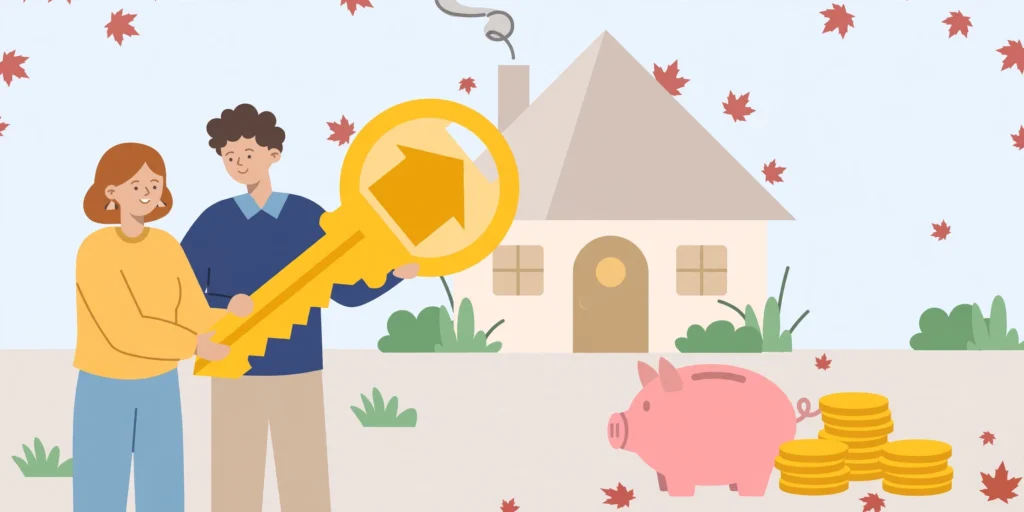
If you’re saving for a first home in Canada, there’s an account that gives you a tax deduction when you put money in AND lets you take it out tax-free when you buy — and half the country has never heard of it. So let’s answer it straight: what is a fhsa canada explained simply? It’s the First Home Savings Account, launched in 2023, and it stacks the RRSP’s tax deduction with the TFSA’s tax-free withdrawal. Nothing else in Canada does both.
Table of Contents
- – What Is a FHSA? Canada Explained Simply
- – Who Actually Qualifies
- – The Contribution Rules (With Real Numbers)
- – FHSA vs TFSA vs RRSP for Your Down Payment
- – How to Open One (and 3 Mistakes to Avoid)
- – The Bottom Line
What Is a FHSA? Canada Explained Simply
The First Home Savings Account is a registered account built for exactly one job: helping first-time buyers save for a down payment. Here’s the deal:
- – Tax deduction on contributions, just like an RRSP. Put in $8,000, knock $8,000 off your taxable income.
- – Tax-free growth inside, like a TFSA. Interest, dividends, capital gains — the CRA takes nothing.
- – Tax-free withdrawals for a qualifying first-home purchase. No withholding, no repayment, ever.
That last point is the killer feature. The RRSP’s Home Buyers’ Plan lets you borrow from yourself, but you must repay it within 15 years. With the FHSA, the money is simply yours. So what is a fhsa canada explained simply? A double tax break: one at contribution, one at withdrawal.
As an Amazon Associate I earn from qualifying purchases.
Recommended tools
- The Wealthy Barber Returns — David Chilton’s Canadian classic — the easiest personal finance read in the country.
- The Millionaire Teacher — Andrew Hallam’s no-nonsense Canadian guide to index investing for beginners.
Who Actually Qualifies
Three conditions: you’re at least 18 (19 where that’s the age of majority), a Canadian resident, and a first-time home buyer — meaning you have not owned a home you lived in during the current year or the previous four calendar years.
That last rule is stricter than it sounds. If you lived in a home you owned at any point in that window, you’re out — and “owning” includes your spouse or common-law partner owning a home you lived in. When in doubt, check with the CRA before contributing, because fixing an ineligible contribution is a headache you don’t want.
The Contribution Rules (With Real Numbers)
- – $8,000 per year in new contribution room.
- – $40,000 lifetime limit.
- – Unused room carries forward. Contribute only $5,000 this year, and you can contribute $11,000 next year.
Put in the full $8,000 a year for five years and you’ve hit your $40,000 lifetime max — every dollar tax-deductible, growing tax-free. Buy your first home, and the whole pile comes out tax-free. No repayment. Nothing owed.
Two safety nets: the account can stay open for at most 15 years, or until the end of the year you turn 71, whichever comes first. And if you never buy a home, unused contributions can be transferred to an RRSP or RRIF tax-free and penalty-free — so nothing is wasted.
FHSA vs TFSA vs RRSP for Your Down Payment
- The TFSA is flexible — tax-free growth and withdrawals any time — but you get no tax deduction going in. Great emergency fund, less great as your main down-payment engine.
- The RRSP (via the Home Buyers’ Plan) gives you the deduction, but withdrawals are really a loan to yourself that you must repay over 15 years. Miss repayments and the amount gets added to your income. It works, but it’s debt wearing a savings costume.
- The FHSA takes the best of both: the RRSP’s deduction, the TFSA’s tax-free withdrawal, and zero repayment. For a first-time buyer, it’s simply the best tool for the job. See our RRSP vs TFSA guide for the deeper breakdown, and read where to park your down payment savings to decide what to hold while you save.
How to Open One (and 3 Mistakes to Avoid)
Opening an FHSA takes about 20 minutes. Most major banks offer one, as do self-directed brokerages like Wealthsimple and Questrade, where you can invest in ETFs and grow the money. Set up automatic contributions and treat it like rent — non-negotiable.
Now the three mistakes:
- 1. Ignoring the 90-day rule. Contributions must sit in the account for at least 90 days before they can be part of a qualifying withdrawal. Drop money in the week before closing and it won’t count. Fund the account early, well before you need it.
- 2. Over-contributing. Go over your limit and you’ll pay 1% per month on the excess until it’s removed. Track your room carefully — with carried-forward room, the annual cap still applies.
- 3. Assuming you qualify when you don’t. The four-year lookback catches more people than you’d think, including people whose spouse owned a home they lived in. Get it wrong and contributions get taxed. Verify with the CRA first — one phone call.
(And if you have kids and a future home on the same budget, read how RESPs work so you don’t mix up the two accounts.)
The Bottom Line
The FHSA is the closest thing Canada has to a cheat code for first-time buyers: a deduction going in, tax-free growth, and a tax-free withdrawal for your first home, with no repayment and a $40,000 lifetime ceiling. Every year you skip it is a year of tax-free growth you’ll never get back. Open one this month — even a small automatic contribution puts your down payment on the fastest legal track in the country.
Take Control of Your Money
Reading is step one — doing is step two. The Budget Planner 2026 is a 21-page printable workbook with monthly budget sheets, a debt payoff planner, savings trackers, and more. $12, instant download.