Introduction
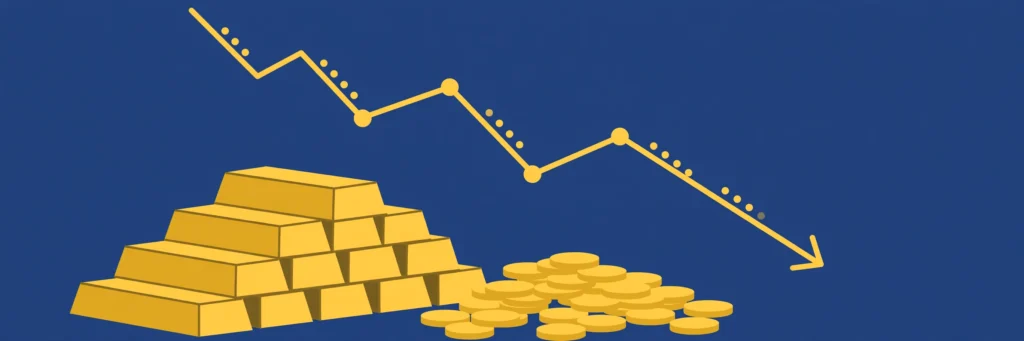
Gold is sliding. Prices sank another $138.80 to land at $4,182.40 an ounce, as traders sold metals and piled into energy while oil surged on the Iran headlines. After gold’s big run higher, the pullback has begun — and every investor is asking the same question: is this a discount, or the start of something uglier? Here’s an honest look at both sides.
Table of Contents
- – What Just Happened to Gold
- – Why Gold Falls When Fear Spikes
- – The Case for Buying the Dip
- – The Case for Staying Away
- – 5 Rules If You Buy Gold Anyway
- – The Honest Bottom Line
What Just Happened to Gold
Gold dropped $138.80 in a single session to $4,182.40 an ounce. That’s a sharp one-day fall, and it came on a day when oil jumped nearly 4% and stock futures wobbled. Some context: gold had been on a tear, drawing in buyers who treat it as a safe haven when geopolitics get scary. Now some of those buyers are taking profits, and momentum has flipped.
One down day doesn’t make a crash — but back-to-back selling after a historic run is exactly how corrections start. The trend is down right now, and fighting the trend with your savings is risky.
Why Gold Falls When Fear Spikes
This confuses people. Isn’t gold supposed to rise when the world gets scary? Usually, yes — but not always, and not in a straight line. Three things push gold down even in nervous markets:
- Profit-taking. After a big run, traders sell winners to lock in gains. Nothing personal — it’s just how markets breathe.
- A stronger dollar trade. When oil spikes and US inflation fears rise, traders bet rates stay higher, which can lift the dollar. Gold is priced in dollars, so a stronger dollar makes gold more expensive for foreign buyers and pressures the price.
- Forced selling. When stocks wobble, some investors sell whatever they can — including gold — to cover losses elsewhere.
The Case for Buying the Dip
Gold bugs have real arguments, and they’re worth hearing:
- – The fear isn’t over. The Hormuz standoff is unresolved, oil is at $108, and inflation could come roaring back. That’s textbook gold-bull territory.
- – Corrections are normal. Even in big bull markets, 5–10% pullbacks happen regularly. Buying dips is how long-term holders build positions.
- – Diversification still matters. A small gold allocation has historically smoothed out portfolios when stocks stumble.
The Case for Staying Away
The bears have points too, and they’re louder right now:
- – Nobody knows where the bottom is. $4,182 could be the floor — or the first stop on the way down. “Buy the dip” only works if it stops dipping.
- – Gold pays you nothing. No dividends, no interest. While you hold gold, your money isn’t compounding anywhere.
- – Chasing headlines loses money. Most people buy gold after it soars (expensive) and sell after it drops (cheap). That’s backwards.
- – The trend is your warning. Buying into a falling price because it “used to be higher” is called catching a falling knife.
5 Rules If You Buy Gold Anyway
If you’ve weighed both sides and still want in, do it like a grown-up:
- 1. Cap it at 5–10% of your portfolio. Gold is insurance, not a retirement plan. If it goes to zero (it won’t) or doubles, your life shouldn’t change.
- 2. Prefer ETFs over physical for small amounts. A gold ETF gives you the price without dealer markups, storage headaches, or the risk of overpaying at a coin shop.
- 3. Never buy jewelry as an investment. The markup on gold jewelry is enormous. You’re buying craftsmanship, not bullion.
- 4. Dollar-cost average in. Split your purchase across several weeks instead of going all in on one day. If it keeps falling, your average price improves.
- 5. No leverage, ever. Borrowing money to buy gold turns a pullback into a catastrophe.
The Honest Bottom Line
Gold at $4,182 after a $138 drop is cheaper than it was — that’s math, not advice. Whether it’s cheap depends on what happens next in the Middle East, with inflation, and with interest rates, and none of that is settled. If gold fits your long-term plan, a dip is a reasonable time to add a little. If you’re buying because of today’s headline, you’re gambling, not investing. The best gold investors are boring: small allocation, long horizon, no panic. Be boring.